Here is today's question for the candidates, followed by answers from each of them (listed in alphabetical order by office):
How should AAPA reach out to pre-PAs—those who are considering entering the profession? Why is this important?
President-Elect
Treasurer
Director At Large
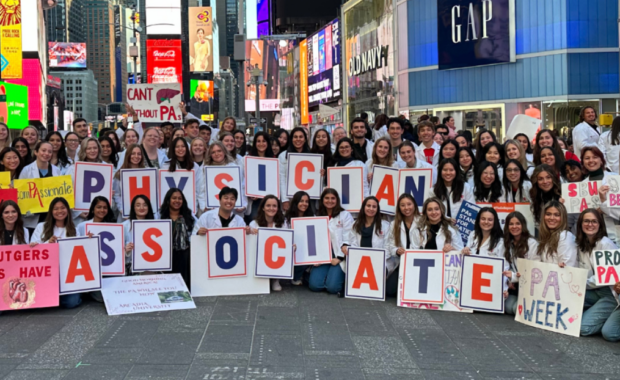
Patti Pagels, MPAS, PA-C: "I don't think it is AAPA's responsibility to reach out to the pre-PA. I think that is our job as PAs. We should be willing to allow people interested in the profession to shadow us in our practice. We should call our local middle schools and high schools and offer to come and talk about our profession. AAPA can help by supplying handouts or videos, but ultimately each of us should take responsibility for mentoring young people interested in the PA profession."
Robert Wooten, PA-C: "We need to begin our work in elementary schools and continue into the colleges letting students know that they can become PAs. Talking with them about what it is going to take and how important it is to work hard in the academic arena in order to achieve this goal. We can as constituent organizations use our local, state or national meetings to do a project where we go into the schools and talk to the students and teachers about our profession. We would reach thousands of students each year through this process.
For those students who have been identified as pre-PAs, then PAs who are in their area could mentor them. Set up opportunities for these students to shadow you in your practice. Staying in contact and encouraging them is important. The outreach to prospective PAs is not only an AAPA responsibility, but it is the responsibility of all PAs."
Linda L. Contreras, MPAS, PA-C: "Reaching out to those interested in our profession is important to our growth. And if we are striving to provide affordable and accessible health care, then growth in the PA profession will be essential.
We reach out to pre-PAs by:
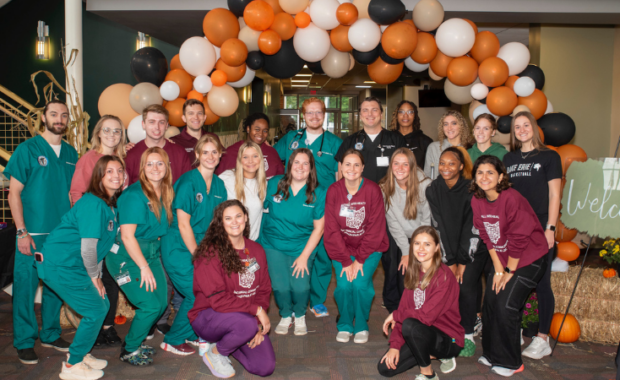
Providing PA mentorship programs-PAs and student PAs can play an active role in mentoring pre-PAs by sharing their experiences both as students and in their practice.
Participating in Career Fair Days-PAs and PA students can participate at middle school, high school and college career fairs. This venue provides an excellent opportunity for both PAs and PA students to educate students on the uniqueness of our profession.
Supporting pre-PA organizations-both at the high school and college level by volunteering to speak on topics related to the PA profession.
Providing timely information-We can utilize the AAPA Web site to provide pertinent information relating to the PA profession and PA education."
Bruce Fichandler, PA: "I believe this to be more of an issue for PAEA and the Student Academy of AAPA rather than AAPA. At the same time, there is an important, albeit an indirect, role for AAPA in this in terms of working to make the PA profession so vibrant and successful that people looking for a career in health care will be attracted to it. In this we continue to be very successful with accomplishments such as helping to obtain enabling legislation and prescriptive privileges in all states, working with state chapters to improve PA practice laws, and increasing communication with and dissemination of information about PAs through numerous national and local publications.
In addition, we have worked hard to put the PA profession out front in the minds of physicians and health care administrators and school guidance counselors so that they are both aware of us and recommending us as an excellent career choice."
Michael C. Doll, MPAS, PA-C, DFAAPA: "We as individual PAs, and the Academy must go into high schools, colleges and universities to introduce our profession. The Academy supplies a wonderful PowerPoint presentation that is available for our members to show to prospective PA students. Many high schools, colleges and universities have career days and medical professional clubs that are interested in hearing more about our profession. In addition, in order to focus on the two goals of improving the diversity of the profession and to supply more PAs to underserved urban and rural areas, the Academy can work with local health care systems and facilities to set up scholarship programs with the agreement that students would work in those areas for a predetermined period to time after graduation. Lastly, the Academy must continue to use electronic means of advertisement that pre-PA students are likely to use on an everyday basis such as Facebook, MySpace and Twitter."
Lawrence Herman, MPA, RPA-C, DFAAPA: "Actually and fortuitously, much of this is already being done with relatively minimal effort provided by the Academy. This is due in part to the recognition achieved by the profession as the number two “best” job in America as the PA profession was ranked by CNN and Money Magazine, behind only software engineers and ahead of nurse practitioners (and everyone else)! As a result of this and other factors such as job security within health care professions, PA programs have witnessed dramatic increases in the number of applicants. As PA program faculty and Director of Admissions for our program, we have over 30 applicants for every seat in our program. I'm not sure how much more reaching out to pre-PAs some programs can take!"
Sandra Keavey, MPAS,PA-C: "Many professions have members that decide to advance their careers by choosing to become a PA. AAPA can increase professional outreach by advertising in the professional journals or Web sites of clinical professionals, i.e., pharmacists, nurses, paramedics, respiratory therapists, radiology technologists, psychologists etc.
As our profession increases in numbers many students choose the PA profession as a first career. I recommend an interactive electronic brochure for counselors or faculty who advise and direct students toward future careers. Ask fellow PAs to be a resource locally for counselors, faculty or students who express an interest in the PA profession. Providing posters for the practicing PA to place in their office or an e-message to include on the practice Web site that provides a link to the AAPA Web site. Reaching out to professional groups and interested parties increases our visibility and strengthens the PA profession by improving the foundation and diversity of our profession."
Next Thursday: What makes you a strong leader for AAPA? Why should voters cast their ballot for you?
Today is one of a series of posts related to the 2010 General Election of the AAPA Board of Directors. Each Thursday between now and April 1 (the day voting begins) and throughout the voting period (April 1-30) we'll be posting a question on PA Pro NOW for each of the candidates to answer. We encourage you to join the discussion by posting your own questions, comments and opinions about the future of AAPA and your profession.
Want to know more from the candidates? Post your own question or comment related to recruiting new PAs.